Hibiscus syriacus 'Antong Two'
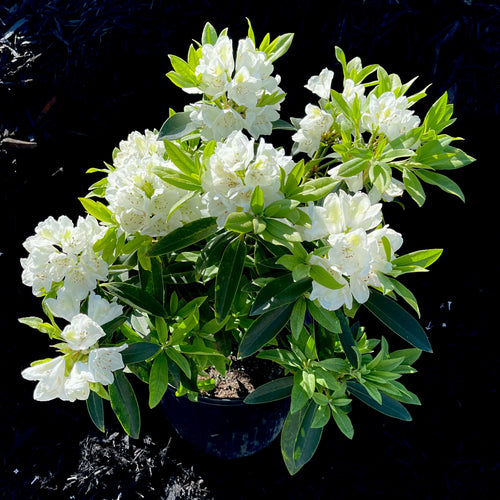
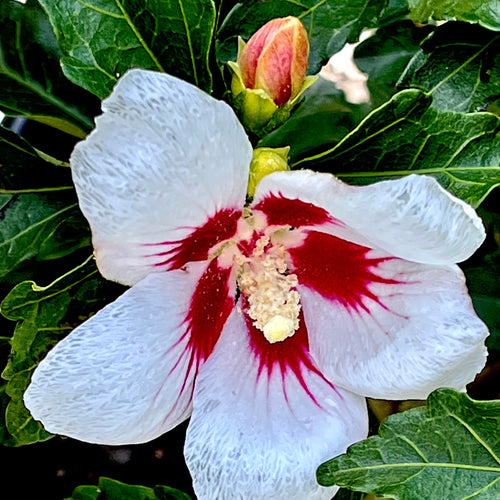
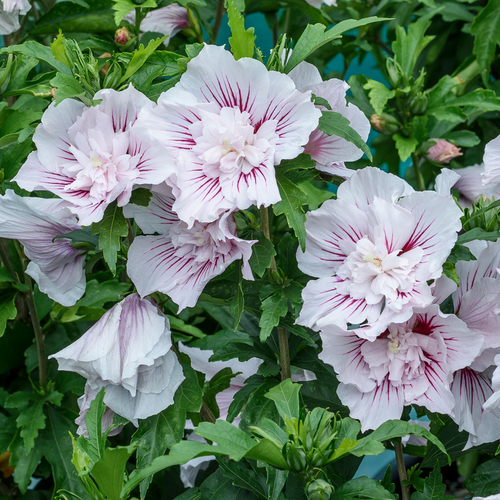
Lil Kim brings the cheerful, late-season flowering of Rose of Sharon into a smaller garden footprint. White blossoms with rich red throats appear when many spring shrubs have finished, creating a crisp contrast against green foliage.
Why Gardeners Love Lil Kim Rose of Sharon Hibiscus
- Compact habit: A smaller stature makes Lil Kim easier to use near entrances, in mixed beds, or beside a sunny patio.
- Long bloom season: Flowers arrive through the warm part of the year, helping bridge the gap between early perennials and fall color.
- Eye-catching centers: The red eye at the heart of each white flower adds detail that rewards a closer look.
- Pollinator interest: The open hibiscus flowers can attract bees and other visiting pollinators.
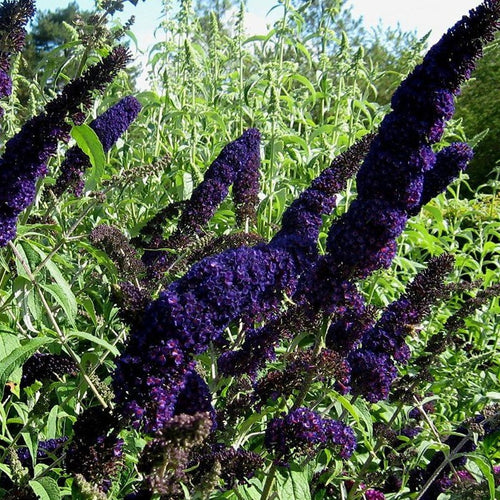
- Easy landscape pairing: White blooms combine naturally with ornamental grasses, purple perennials, and dark-leaved shrubs.
Lil Kim combines crisp white flowers with dramatic red centers. The two-tone blooms look striking beside purple perennials, ornamental grasses, or darker evergreen foliage. Place this compact Rose of Sharon near a walkway or patio so the details of each flower can be appreciated.
Its smaller scale offers more planting flexibility than traditional tall Rose of Sharon selections. Several plants can bring continuity to a sunny border, while one specimen can provide a focal point among summer perennials. The white flowers also fit naturally into nearly any garden color scheme.
Do not be alarmed if the plant is slow to leaf out in spring; Rose of Sharon responds to warmer weather. Choose a sunny site with well-drained soil, water during establishment, and avoid excessive fertilizer. Shape lightly before new growth begins, since flowers form on new wood.
Where to Plant Lil Kim Rose of Sharon Hibiscus
Give Lil Kim a sunny position where its flowers can be seen up close. It works well in a small flowering hedge or as a repeated accent among summer perennials. Allow air movement around the branches.
Growing and Care Tips
Plant in well-drained soil and water regularly during establishment. Once settled, Rose of Sharon tolerates short dry periods but blooms best with moisture during prolonged heat. Prune in late winter or early spring to shape the plant, since flowers develop on the current season's growth.
Explore a Related Plant
For another option in the same plant group, explore Pink Chiffon Rose of Sharon.