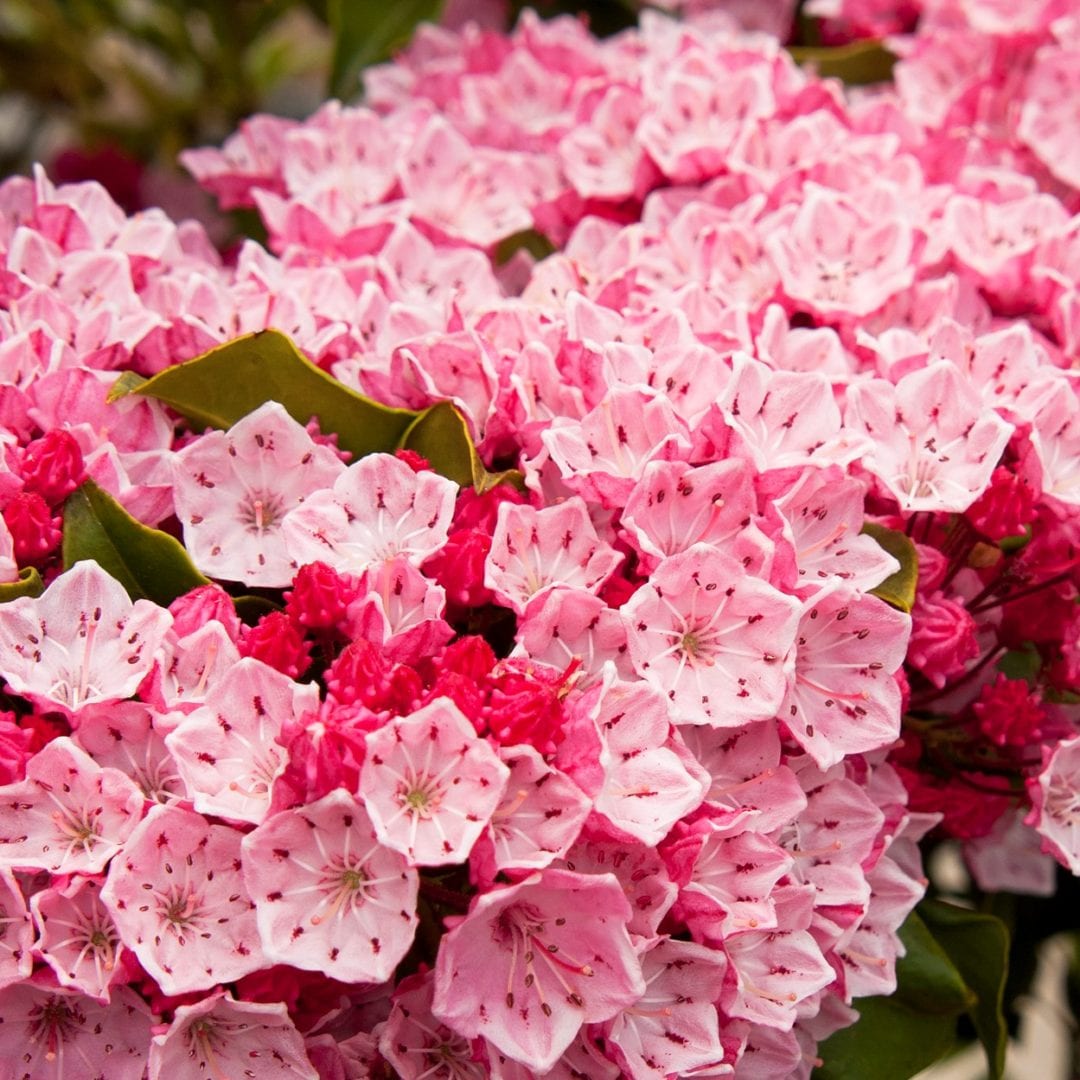
Kalmia latifolia 'Olympic Fire'
Olympic Fire Mountain Laurel puts on a memorable late-spring transformation. Deep reddish-pink buds cluster at the ends of its branches, then open into lighter pink flowers. Seeing both stages together gives the shrub a lively two-tone effect against its glossy evergreen foliage.
Why Gardeners Love Olympic Fire Mountain Laurel
- Dramatic buds: Strong red-pink buds deliver color even before the flowers open.
- Soft pink flowers: Open blooms create a striking contrast with the darker buds.
- Evergreen body: Dense foliage gives woodland borders structure all year.
- Mid-sized form: At roughly 5 feet tall and wide, it has more presence than dwarf laurels.
- Shade-friendly character: An excellent flowering choice for gardens sheltered from harsh sun.
Where to Plant Olympic Fire Mountain Laurel
Give Olympic Fire room to form a rounded shrub in a woodland edge, broad foundation planting, or beneath high-branched trees. A mature footprint around 5 by 5 feet makes it useful as a specimen or in loose groups. Pair it with a smaller mountain laurel to play up differences in flower color and scale.
Growing and Care Tips
Choose acidic, organically rich soil that drains freely. Mountain laurel has fine roots that suffer in waterlogged ground, so be cautious with heavy clay and avoid planting too deeply. Filtered shade is ideal in warm climates; some morning sun can encourage blooms. Water slowly and deeply during establishment, mulch with pine bark, and avoid aggressive cultivation around the roots. Deadhead carefully after flowering if desired. Listed zones are 5–9.
Olympic Fire is particularly rewarding in a garden you walk through every day. Its darker buds begin the show before the pale flowers unfold, so the shrub changes character as spring progresses. Set it where morning light catches the flower clusters, with enough space for its naturally rounded shape. Against a backdrop of ferns or darker evergreens, the contrast between bud and bloom becomes even more noticeable. A single mature specimen can anchor a woodland corner, while a loose grouping creates a more generous seasonal display.
Because mountain laurel makes flower buds for the following season, avoid heavy pruning late in summer. The plant is sensitive to wet feet, especially when young; monitor drainage after prolonged rain rather than assuming a shaded bed stays suitably moist. An acidic mulch helps protect shallow roots, but keep it away from the stem base. All parts are poisonous if eaten, so avoid planting within reach of grazing animals.
Explore a Related Plant
For another garden-worthy option, explore Show Time Mountain Laurel and compare its form, flowers, and growing needs.