































1. Is Amethyst Falls the same as invasive Chinese wisteria?
No. Amethyst Falls is a selection of American wisteria, Wisteria frutescens, and generally grows more moderately than Chinese or Japanese wisteria. It still needs support and occasional pruning.
2. Will Amethyst Falls Wisteria bloom in shade?
It tolerates partial shade, but flowering is usually more abundant in full sun. If the vine produces leaves but few flowers, insufficient sunlight is one factor to consider.
3. Where should I plant Amethyst Falls Wisteria?
Provide full sun for the strongest flowering, although partial shade is tolerated. Use a sturdy trellis or pergola, train young stems, and prune as needed to keep the vine within bounds. Water consistently as roots establish and avoid excessive high-nitrogen fertilizer, which may encourage leaves instead of blooms. Listed for USDA zones 5–9.
4. How much space does Amethyst Falls Wisteria need?
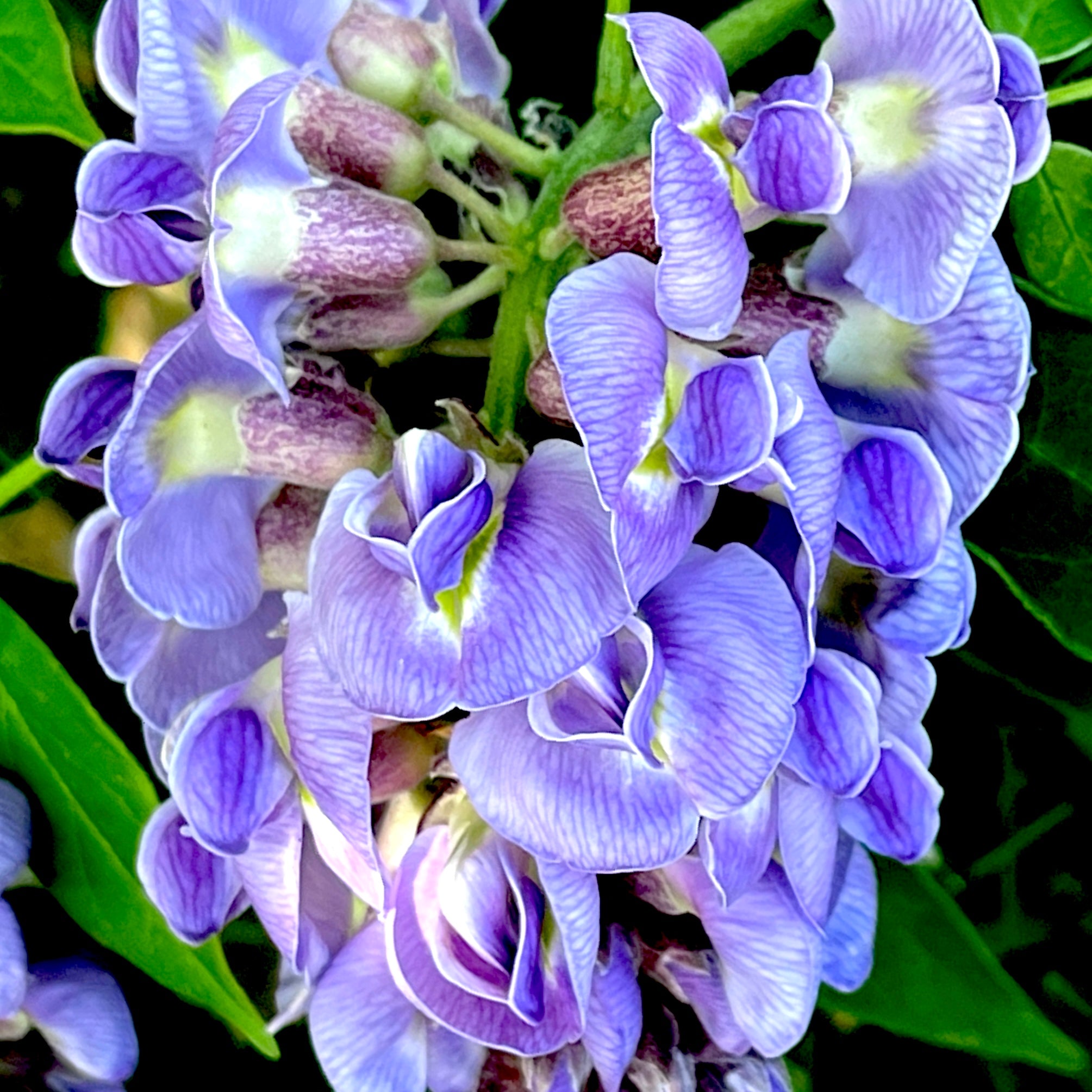
Amethyst Falls offers the romantic look of wisteria without the extreme vigor associated with some Asian species. Its twining stems need a durable support, and the hanging blossoms are especially effective where they can be viewed from below. Mature dimensions are often around 10 feet in height and spread when guided on a structure.
5. What makes Amethyst Falls Wisteria useful in a landscape?
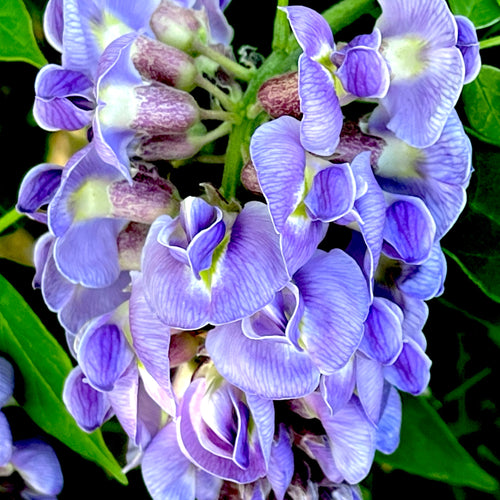
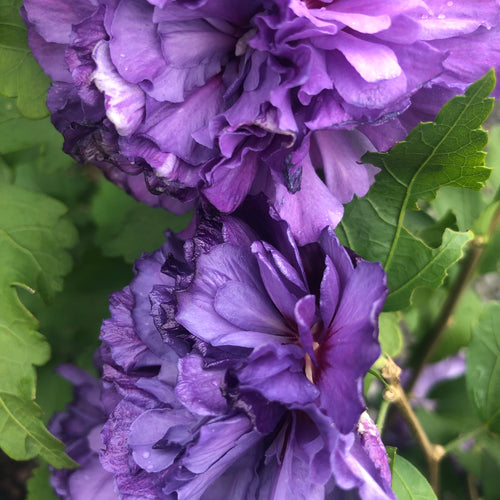
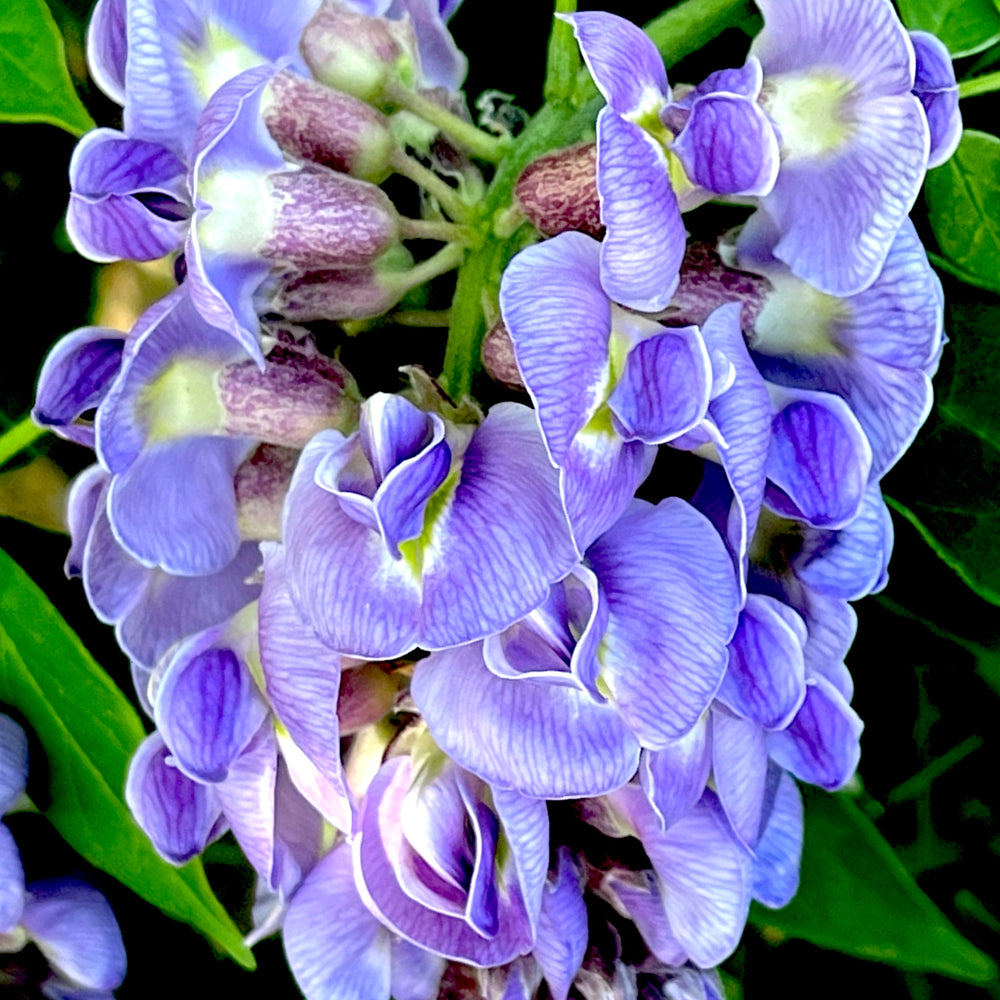
Cascading purple flower clusters on a more manageable American wisteria vine. Purple spring flowers bring color overhead; a twining habit dresses up sturdy arbors and pergolas.
6. What care helps Amethyst Falls Wisteria establish well?
Provide full sun for the strongest flowering, although partial shade is tolerated. Use a sturdy trellis or pergola, train young stems, and prune as needed to keep the vine within bounds. Water consistently as roots establish and avoid excessive high-nitrogen fertilizer, which may encourage leaves instead of blooms.